
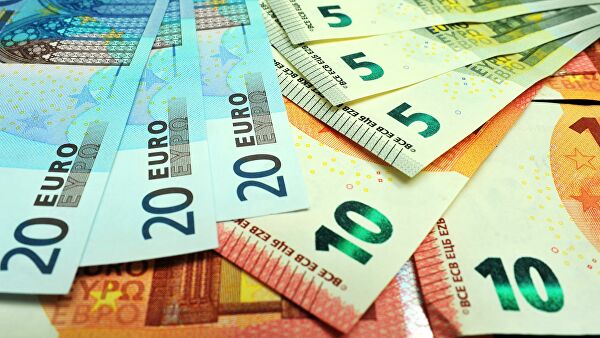
The Concept of the Law on the Introduction of the Euro in the Republic of Bulgaria has been published.
According to the plan, Bulgaria is scheduled to adopt the euro on January 1, 2024. This is only one year and two months away. During this time, all procedures for a smooth transition to the European currency are expected to be completed.
For this purpose, the Concept of the Law on the Introduction of the Euro in the Republic of Bulgaria has already been prepared and published on the portal for public consultation.
It explains the key aspects of the currency conversion process. The law will generally regulate the method and timing of cash exchange, price conversion rules, wages, social benefits, financial instruments, consumer protection measures, and sanctions.
Currency Exchange
The conversion will be carried out using an irrevocably fixed exchange rate of 1.95583 leva per 1 euro, which will be confirmed by an amendment to Regulation (EU) No. 2866/98. Conversion of amounts using the abbreviated form of the fixed exchange rate is not permitted; the full fixed exchange rate, i.e., with all five decimal places, must be used.
Conversion of prices and other values from lev to euro will be accomplished by applying the full numerical value of the fixed exchange rate and rounding the resulting amount to two decimal places based on the third decimal place in accordance with the mathematical rules for rounding: if the third decimal place is less than five, the second decimal place remains unchanged, and vice versa—if it is five or more, rounding is performed to the highest decimal place.
Contracts, Fees, Taxes, Loans, and Deposits
The introduction of the euro will not change or abolish existing contracts, taxes, or fees. All contracts, including loans, deposits, and financial instruments denominated in lev, will remain in effect after Bulgaria's accession to the euro. The value of the lev will be equivalent to the value of the euro, converted using an irrevocably fixed exchange rate of 1.95583 levs per 1 euro.
All accounts with balances in levs will be converted to euros on the first day of the euro's introduction, and this must be done free of charge at the fixed exchange rate.
Exchange of Bulgarian banknotes and coins for euro banknotes and coins
The Bulgarian National Bank will exchange an unlimited number of lev banknotes and coins for euros free of charge. All other credit institutions and the Bulgarian Post will provide the same service free of charge for six months after the euro's introduction, and then for a fee.
The BNB will organize the issuance of euro coins with the Bulgarian national currency. The bank will also be responsible for organizing and delivering these euro banknotes and coins to all other credit institutions, merchants, and post offices. Its responsibilities also include the withdrawal, storage, and destruction of lev banknotes and coins. Replace damaged Bulgarian euro banknotes and coins and identify cases in which this will be impossible. Risks include attempts to exchange counterfeit Bulgarian currency, but this too will be strictly monitored. There are even plans to create a compensation model for merchants and credit institutions that accept payments with counterfeit banknotes and coins.
Hybrid Transition Period to the Euro
In the first month of the euro's introduction, our country will experience a so-called dual circulation period for the lev and euro. During this period, citizens and businesses will be able to pay in lev, but merchants will be required to return change to customers only in euros. To prevent the risk of merchants being flooded with Bulgarian cents, they will not be required to accept more than 50 Bulgarian coins.
ATMs will dispense only euros from the first day they accept the currency.
Dual Pricing Period
Prices in all establishments in our country must be listed in both levs and euros for a period that begins one month after the EU Council decision on the introduction of the euro in Bulgaria and ends 12 months after the introduction of the euro in Bulgaria. If everything goes according to plan, prices will be listed twice by the end of 2024. Prices are listed in levs and euros on all types of brochures, price lists, invoices, receipts, etc. The Consumer Protection Commission will monitor the accuracy of price conversion.
"Honest Trader" Campaign and Trader Blacklist
To encourage honest traders, the Ministry of Economy and Industry, together with the Consumer Protection Commission and representatives of public organizations, is organizing the "Honest Trader" campaign. Traders/service providers who comply with the rules for accurately converting prices of their goods/services from levs to euros, as well as clearly and correctly displaying prices during the dual pricing period, will receive an "Honest Trader" sticker to inform users that they are participating in the campaign.
Traders who deliberately violate conversion or rounding rules will be punished in accordance with current legislation, and their names will be included in a "blacklist" that will be published on the website of the Consumer Protection Commission, at The euro border, as well as through other information channels, will be used. The institutions organizing the campaign will be responsible for monitoring traders' best practices, and citizens will be encouraged to participate in collecting and sharing information.
Wages and Pensions
Wage obligations, pensions, social benefits, and other benefits will be paid in euros after the euro's introduction. Amounts in employment contracts, as well as for the aforementioned payments, should be converted in favor of the employee or recipient of social benefits, rounded up to the nearest euro cent.
Protecting Users from Abuse
Many Bulgarians fear that prices will rise sharply with the introduction of the euro. Therefore, the Law will include a specific provision to protect Bulgarians from such influences. The interests of Bulgarian citizens must be protected to the maximum extent possible. It is essential to ensure that consumers are not at a greater disadvantage after the introduction of the euro than they would have been had the euro not been introduced. To this end, all possible measures will be taken to prevent abuses in the conversion of levs into euros. Effective monitoring and control tools will mitigate the risk of price increases resulting from the introduction of the euro. Similar measures will be taken against potential abuses and counterfeits related to the introduction of euro banknotes and coins.
Deadlines
According to the plan adopted by the previous government, the euro was to become the official currency in our country on January 1, 2024. However, according to the latest information from BNB Governor Dimitar Radev this week, we are significantly behind schedule. Furthermore, to join the eurozone, Bulgaria must have a permanent government and National Assembly.
Material provided by Flagman
